

CBA playoff Game 2 between Guangsha and Shanxi left fans scratching their heads. What should have been a thrilling matchup was shattered by constant whistles. The final score was 86-81, giving Guangsha the win and pushing the series to a decisive Game 3. Yet, regardless of which team fans supported, the focus wasn’t on tactics or play—it was on the referees’ calls.
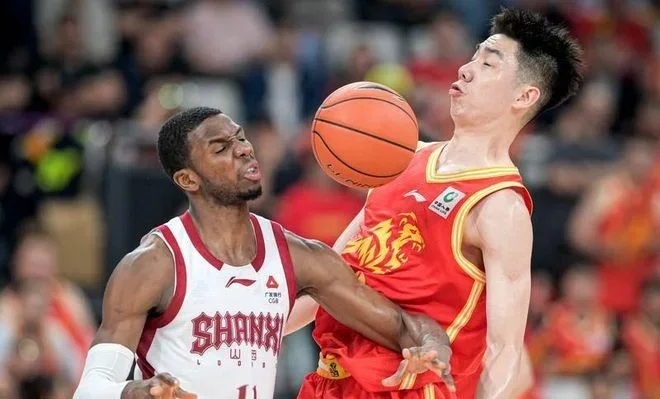
The game featured over 50 fouls and more than 60 free throws combined. Just as a fast-paced offensive sequence developed, a whistle would cut it short. Fans in the stands were more exhausted than the players on the court; just as their eyes locked onto the ball’s rhythm, they had to wait for officials to adjust. The game nearly turned into a battle between players and referees, not a basketball contest. The officiating scale was wildly inconsistent—physical play was allowed in the first three quarters, but in the second half, even minor contact drew fouls. The same move would be called a foul when Shanxi did it, but not when Guangsha did it, leaving everyone bewildered.
Players started focusing more on testing the referees’ boundaries than competing against their opponents. The game became fragmented, emotions swinging with every whistle. For example, a screen by Guangsha’s foreign player clearly looked illegal on replay, yet the referees didn’t call a flagrant foul even after review, raising eyebrows. The officials became an invisible hand controlling the game, with the ball moving erratically and the flow dictated by their decisions.
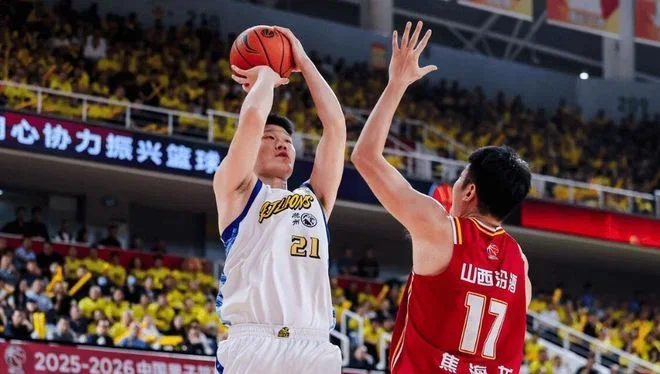
Shanxi’s loss wasn’t just by five points—their spirit crumbled first. They started strong, with Brown hitting threes and Tucker driving aggressively. The foreign players worked well together, and Shanxi trailed by only five at halftime, clearly still in the game. But in the second half, things fell apart. Their actions became sloppy, turnovers piled up, and the foreign players looked like a pickup team thrown together at the last minute.
The players’ expressions changed dramatically—from fighting spirit early on to frustration and confusion later, and finally losing all momentum. They were wasting energy fighting themselves. Even more baffling was the coach’s decision-making. Near the end of the third quarter, Liu Chuanxing entered the game, grabbed rebounds, scored, and anchored the defense, lifting the team’s morale. As soon as the momentum built, the coach subbed him out and brought back the underperforming starters. The rebounding advantage vanished, the defense became passive, and the energy immediately dissipated.
Once the team’s spirit was lost, every weakness on the court was exposed. The coach stuck to rigid rotations, repeatedly using players who were struggling, essentially backing the team into a dead end. Meanwhile, Guangsha’s victory was far from easy. Their starting guard was injured, their offense sputtered, and their foreign players were in a slump. They relied on grit and free throws to scrape together points. They won simply because they didn’t collapse first—they held on for one more breath than Shanxi.
Hu Jinqiu was outstanding, posting 17 points and 11 rebounds, grabbing key offensive boards in critical moments with the highest efficiency on the floor. Brown finished with 19 points, 5 rebounds, and 5 assists, hitting his free throws with composure. Other players stepped up intermittently, piecing together a hard-fought victory. If anything, Guangsha’s win came from their refusal to go home—it wasn’t dominance, just endurance.
The statistics highlight how chaotic the game was. In the first half, Shanxi’s outside shooting kept them close while Guangsha used zone defense to slow the pace. By the third quarter, physical play intensified, shooting percentages dropped, and the paint became a mosh pit. Both teams relied on free throws for points. Shanxi’s Brown and Tucker desperately chased the deficit, coming close several times but never crossing the threshold. In the fourth quarter, their three-pointers went cold, forcing them to rely on second-chance points and free throws. The suspense lasted until the final minute, when Shanxi’s mentality finally cracked, allowing Guangsha to secure the win.
Honestly, this kind of officiating is torture for fans. It turns a good game into a test of referees’ judgment. Cheers and complaints from the stands were tinged with helplessness. Inconsistent and chaotic calls aren’t new—they’ve been a lingering issue. Contrast this with the clean, well-oiled Beijing-Guangdong clash earlier, which featured excellent tactics, competition, and a game-winner—everyone left satisfied. The difference is stark.
It’s not all complaints, though. The CBA is working to improve by introducing foreign referees, increasing replay review, and establishing accountability for missed or wrong calls. They clearly know the old ways won’t cut it and are moving in the right direction. This chaotic game might serve as a wake-up call, urging the league to make real changes. If fans want pure basketball, referees need to be more professional, coaches need to be flexible, and players need to focus on the game, right?
Now the series is